
 Quiz
All games / Bhabhi
Thulla · Get Away
Bhabhi
The Punjabi card-table favourite: escape the pile, empty your hand, and don’t be last.
3–10 players · Card Game
The host signs in to create a room. Invited players join without an account.
Take your seat
How Bhabhi works
- 01
Choose your table size and add computers if you need extra players.
- 02
Invite friends by PIN, QR, or link. Everyone chooses their own name.
- 03
Follow suit, avoid the pickup, and empty your hand before you are last.
A few important rules
- The Ace of Spades opens. Follow the led suit whenever you can.
- An off-suit card causes a thulla: the highest card of the led suit picks up the pile.
- Everyone presses Next between turns. The last player holding cards is Bhabhi.
At your FamPlay table
- 3–10 people and computers combined
- Learning computer opponents
- Read-only previous-turn replay
- Simplified and around-the-table views
Keep the evening going
More games, more good company
Quiz Card Game
 Card Game
 Scoreboard
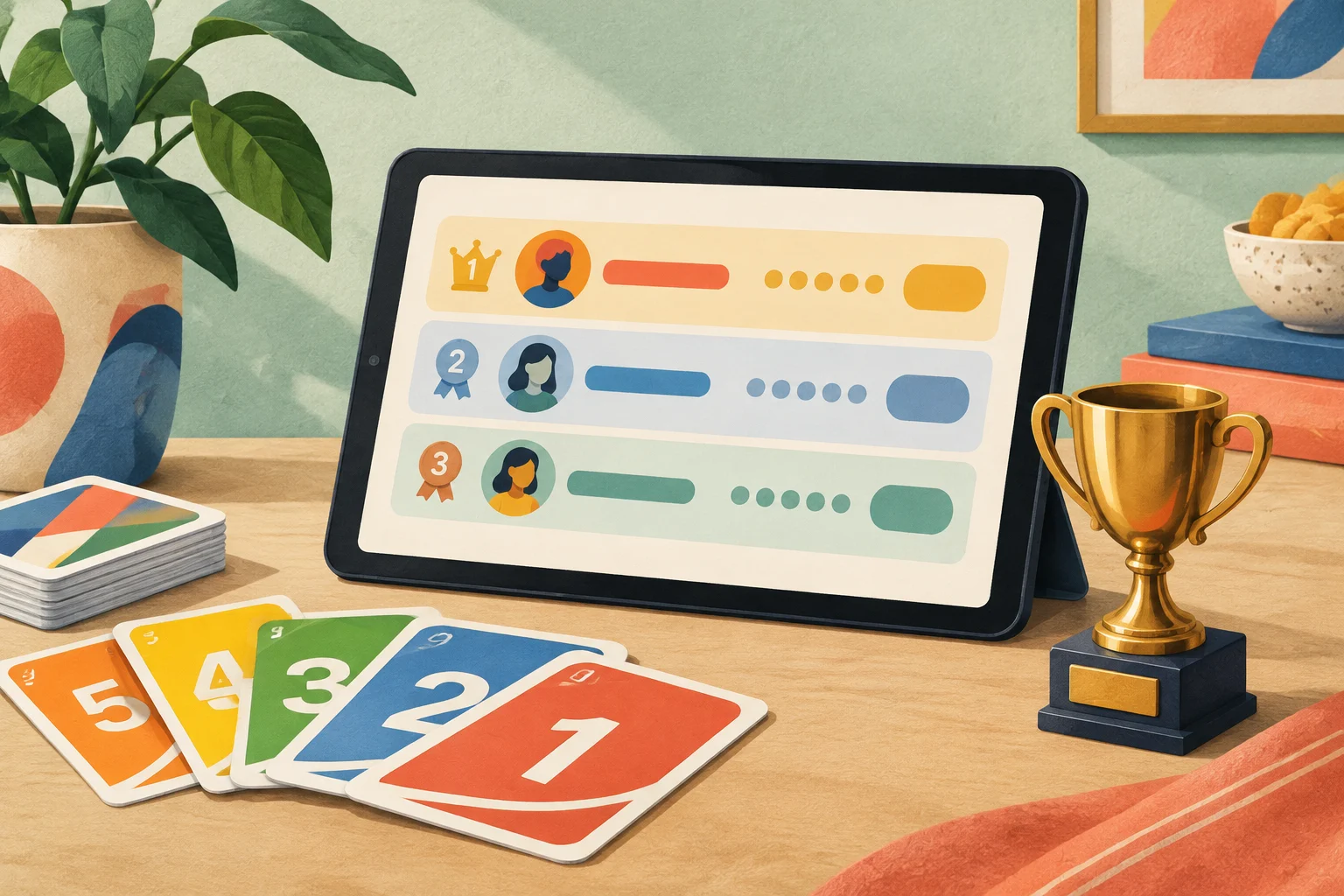
Keep score for physical Phase 10 cards while everyone follows live on their own screen.
2–10 playersLive scoring
Being ahead doesn’t mean you’re getting away.
A high card can win you the very pile you wanted to avoid. That little reversal is the heart of Thulla.
The story
A tradition, not an inventor’s name
Bhabhi belongs to the card-table traditions of Punjab and North India. Also known as Get Away or Bhabhi Thulla, its aim is simple: empty your hand before you become the last person holding cards.
Like many enduring folk card games, Bhabhi has no single documented inventor or printed founding year. It was passed down orally across generations—taught by cousins, grandparents and neighbours on verandas, during summer holidays, on long train journeys and at late-night festival gatherings.
Because it needs only one standard 52-card deck and scales effortlessly from three players up to a crowded circle of ten, it became a staple whenever a whole household wanted to play together without leaving anyone out.
Names & roots
Bhabhi, Thulla, Get Away and its regional cousins
Get Away describes the objective: shed every card in your hand and escape the table while others are still fighting to clear theirs. Once you are out, you watch from the sidelines as the remaining players try not to be last.
Thulla (sometimes called Tochoo in parts of North India) names the turning point of the game—the off-suit card that interrupts a trick and forces whoever played the highest card of the led suit to pick up the entire pile.
Regional variations grew wherever families carried the game. In South India, especially Kerala and Tamil Nadu, a closely related cousin is known as Kazhutha (Donkey), with local house rules and versions that introduce a trump suit. Across the diaspora—from the UK and Canada to East Africa—families kept their own quirks, such as how the Ace of Spades opens the round and how a player escapes on their final card.
At the table
How it has always looked
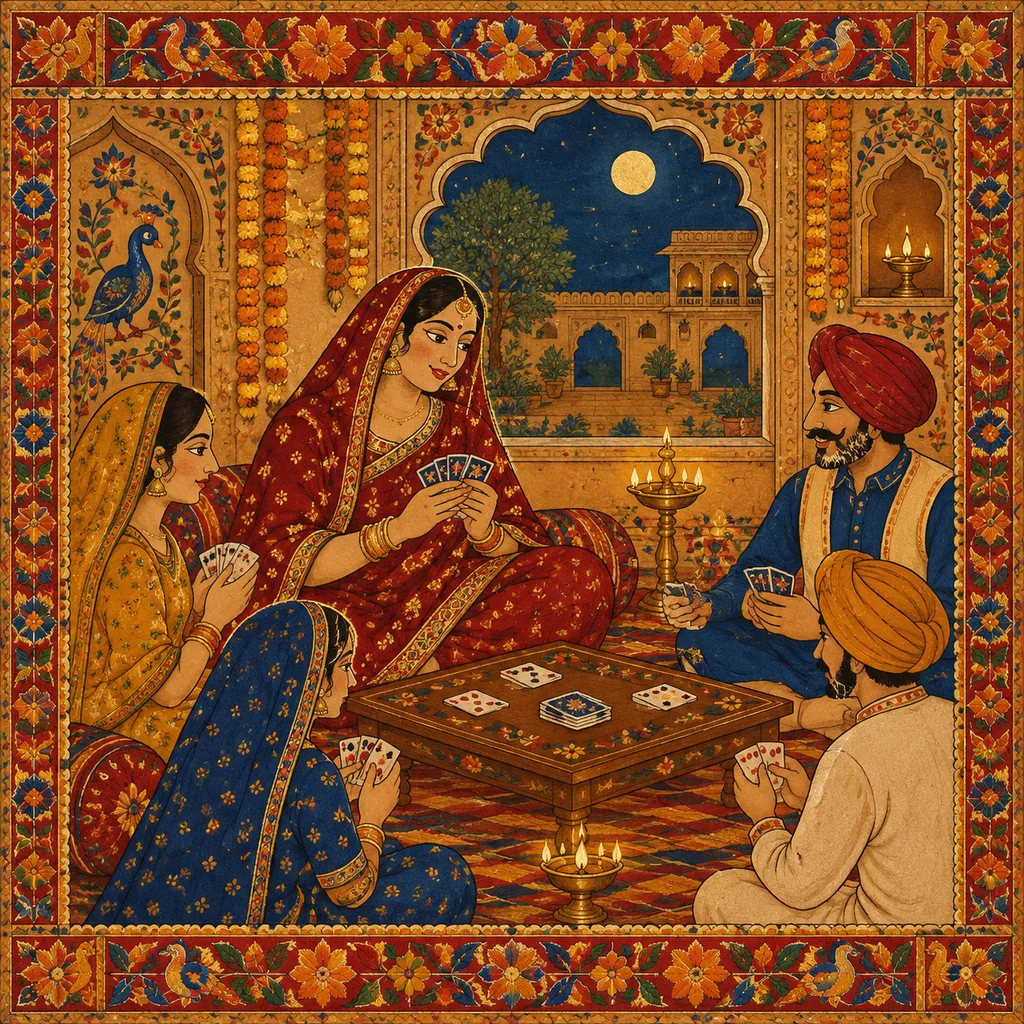
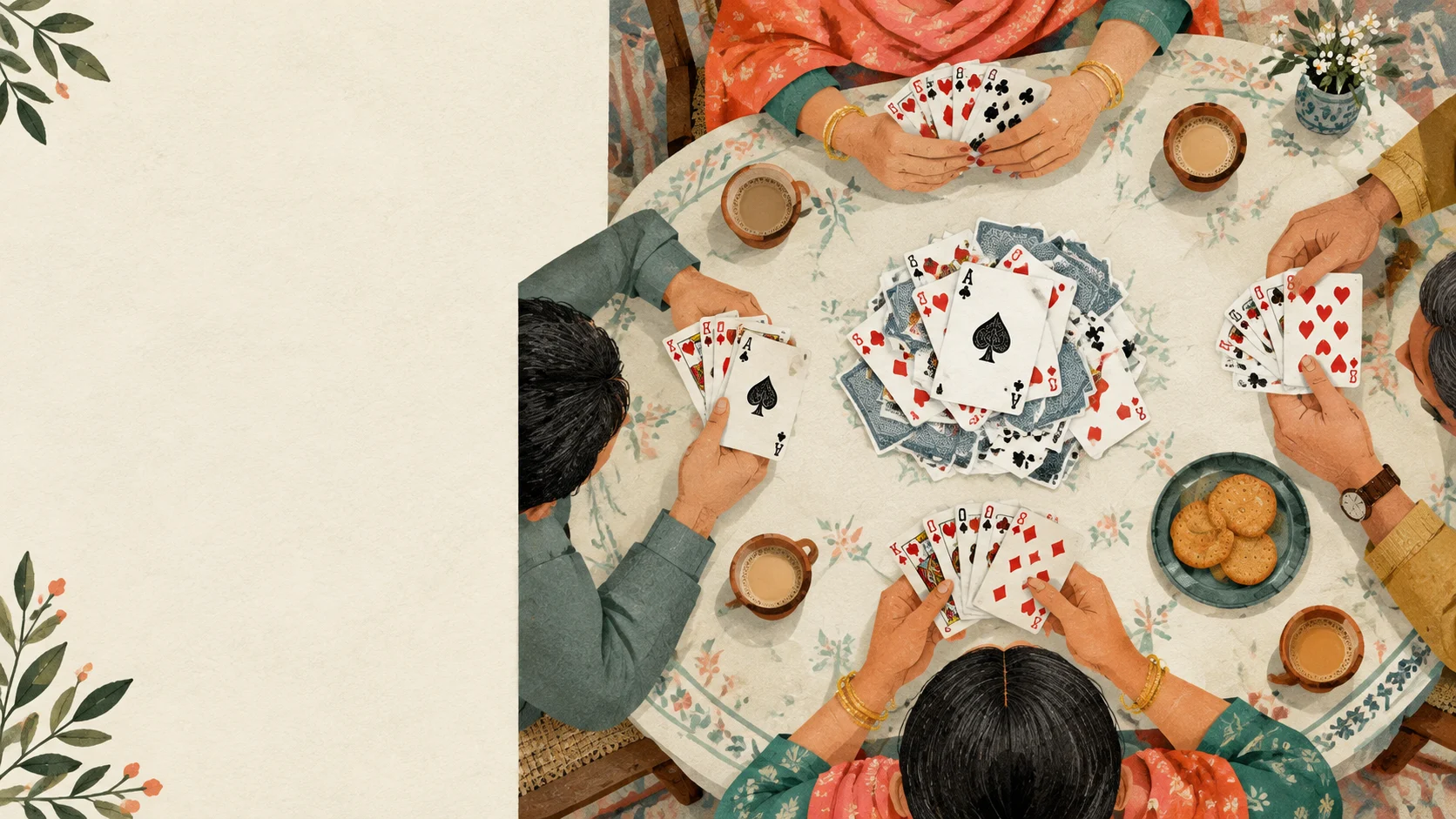
Cards on a dhurrie carpet, brass lamps burning low, everyone leaning in. This is the setting the game grew up in — a household pastime, played through long evenings rather than in a club or a printed rulebook.
That picture shapes how we built the table on FamPlay: turn by turn, with time to look at what the last card did before anyone plays the next one.
Around our table
Keep the suspense. Keep it kind.
The traditional name has also been used as a mocking label for the loser. Here, it is the familiar game title—not an invitation to make anyone the joke. The fun is in the surprise pickup, the lucky escape and the next round together.
On FamPlay, gather real players and fill the remaining seats with computers. Take a breath between turns: everyone gets time to see how that last card changed the table.
The opening card
The Ace of Spades starts the round. From there, everyone must follow the led suit when they can.
The sudden pickup
An off-suit card ends the trick. The highest card in the led suit takes the pile—not a prize you want.
Your great escape
Get rid of your cards and leave the remaining players to their suspense. The last hand left loses.